 EN









Concert LED Screen Installation | P2.5 LIVERSE Case
60m Concert LED Screen Installation at LIVERSE Art Center, Guangzhou
A large concert stage needs more than an impressive backdrop. It needs a visual system that works with the venue’s architecture, supports live performances, and delivers a consistent viewing experience across a large audience area.
Located in Nansha, Guangzhou, China, LIVERSE Art Center features a large-scale concert LED screen installation designed for immersive live entertainment. With a reported project span of approximately 60 meters in width and 15 meters in height, the installation uses P2.5 indoor LED display modules to create an expansive visual environment for concerts and stage productions.
Project Overview
|
Project Name |
LIVERSE Art Center — Concert LED Display Project |
|
Location |
Nansha, Guangzhou, China |
|
Application |
Indoor concerts and live performances |
|
Display Configuration |
Large-scale immersive stage LED display |
|
Reported Dimensions |
Approx. 60 m (W) × 15 m (H); project envelope, not confirmed net display area |
|
Pixel Pitch |
P2.5 (2.5 mm) |
|
LED Module Brand |
LAMP, per project information supplied |
|
Module Size |
320 × 160 mm |
|
Calculated Pixels / Module |
128 × 64 pixels (based on nominal pitch and module size) |
|
Installation Environment |
Indoor entertainment venue |
An Immersive LED Stage Built for Live Entertainment
Traditional concert stages often use a single LED backdrop positioned behind the performers. At LIVERSE Art Center, the visual design takes a broader approach.
The venue features a wraparound stage environment, combining large LED display sections with architectural elements to extend visual content beyond the central performance area.
This arrangement supports live camera feeds, animated backgrounds, artistic graphics, and other stage content, depending on the production system used.
For audience members seated in different parts of the venue, large-format LED visuals can make performer close-ups and scene details easier to follow. The display becomes part of the stage design rather than simply a background surface.
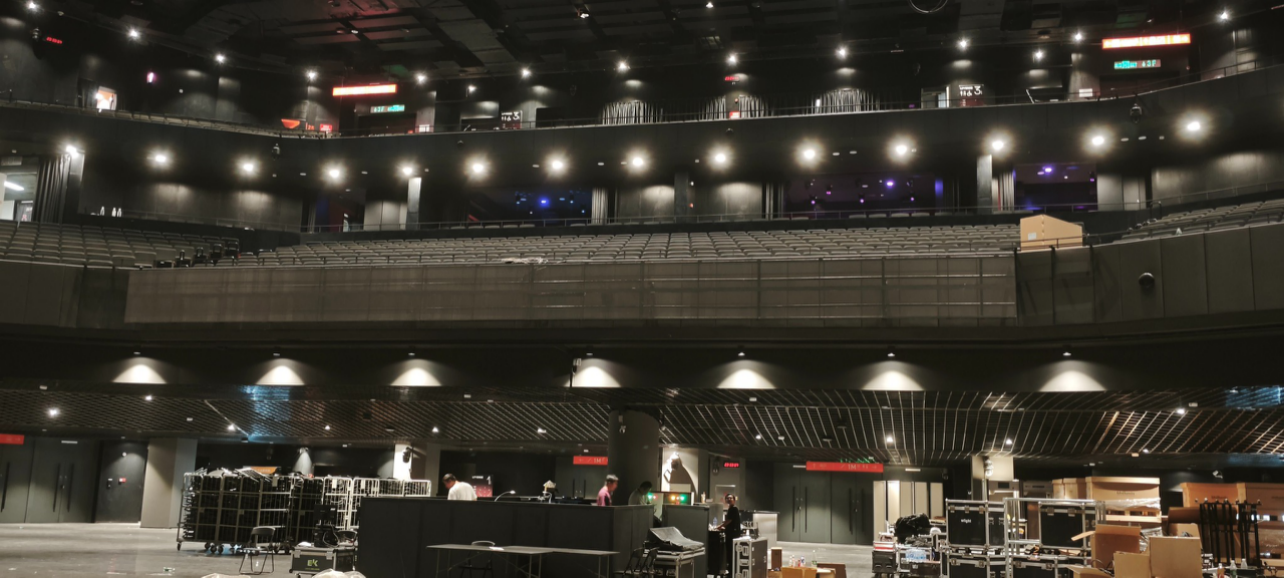
Venue context: the auditorium and performance space before the final show visuals.
Large-Scale Concert LED Screen Installation
Installing an LED video wall of this scale requires careful coordination of structural work, module positioning, electrical connections, equipment access, and stage production activities.
The supplied photographs document several key phases of the installation.
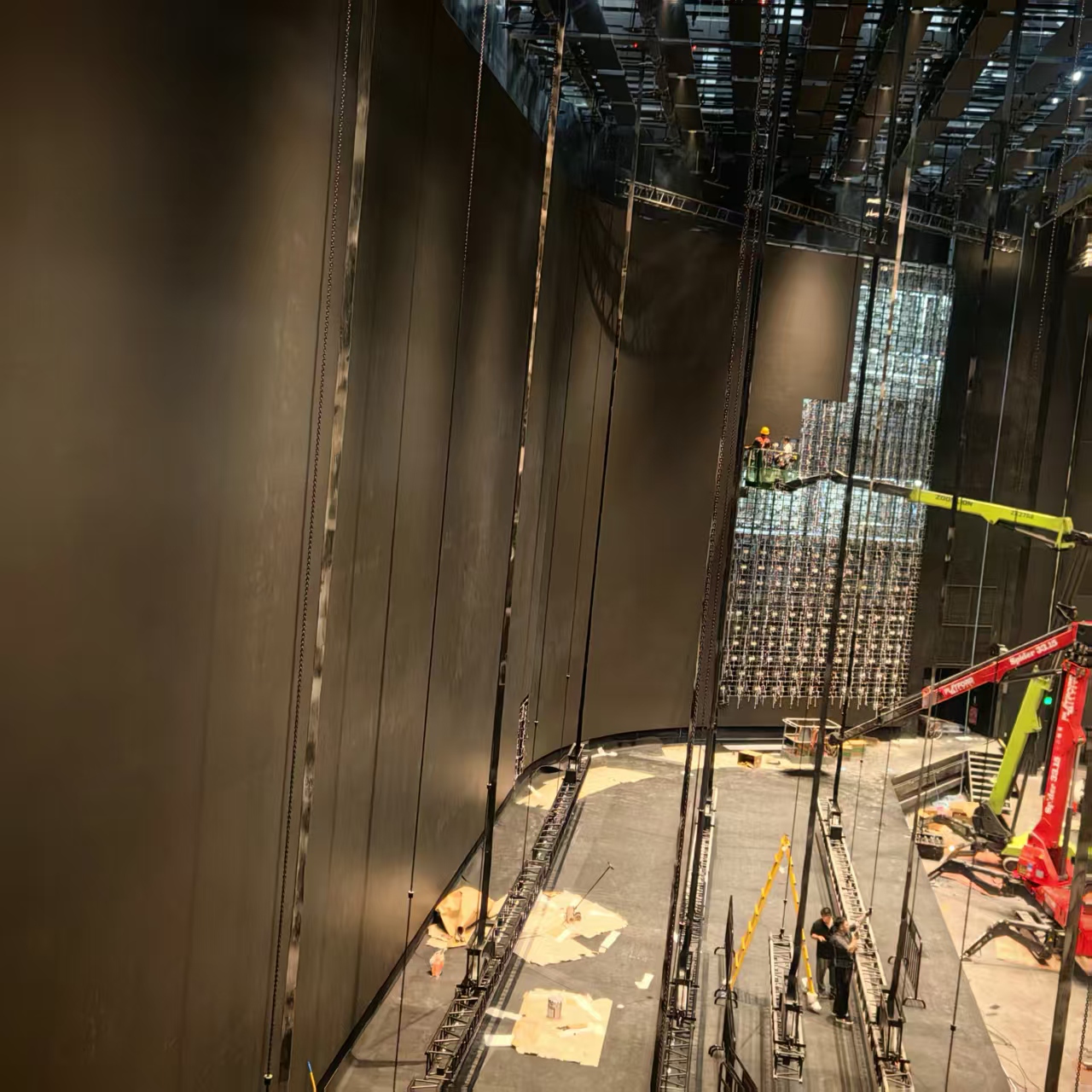
Structural Framework and Mounting Preparation
The initial installation stage shows an extensive metal support framework arranged across the performance area. For a large stage LED screen, the framework must accommodate the selected display configuration and provide secure mounting points for the cabinets and related equipment.
Accurate alignment matters: small deviations can become visible across a wide display surface. Structural loading and installation safety must be checked against an approved engineering plan.
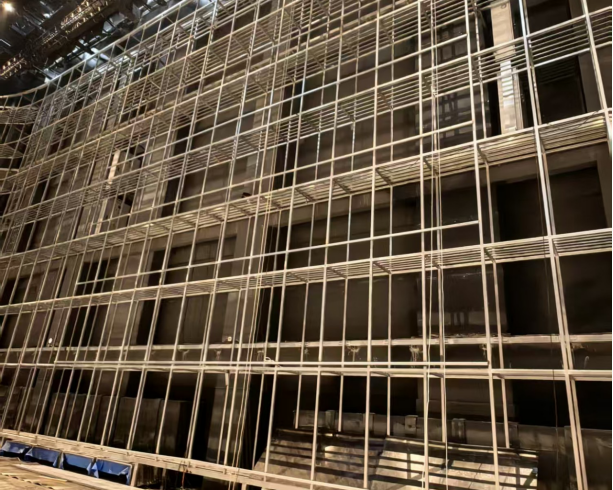
Initial structural framework
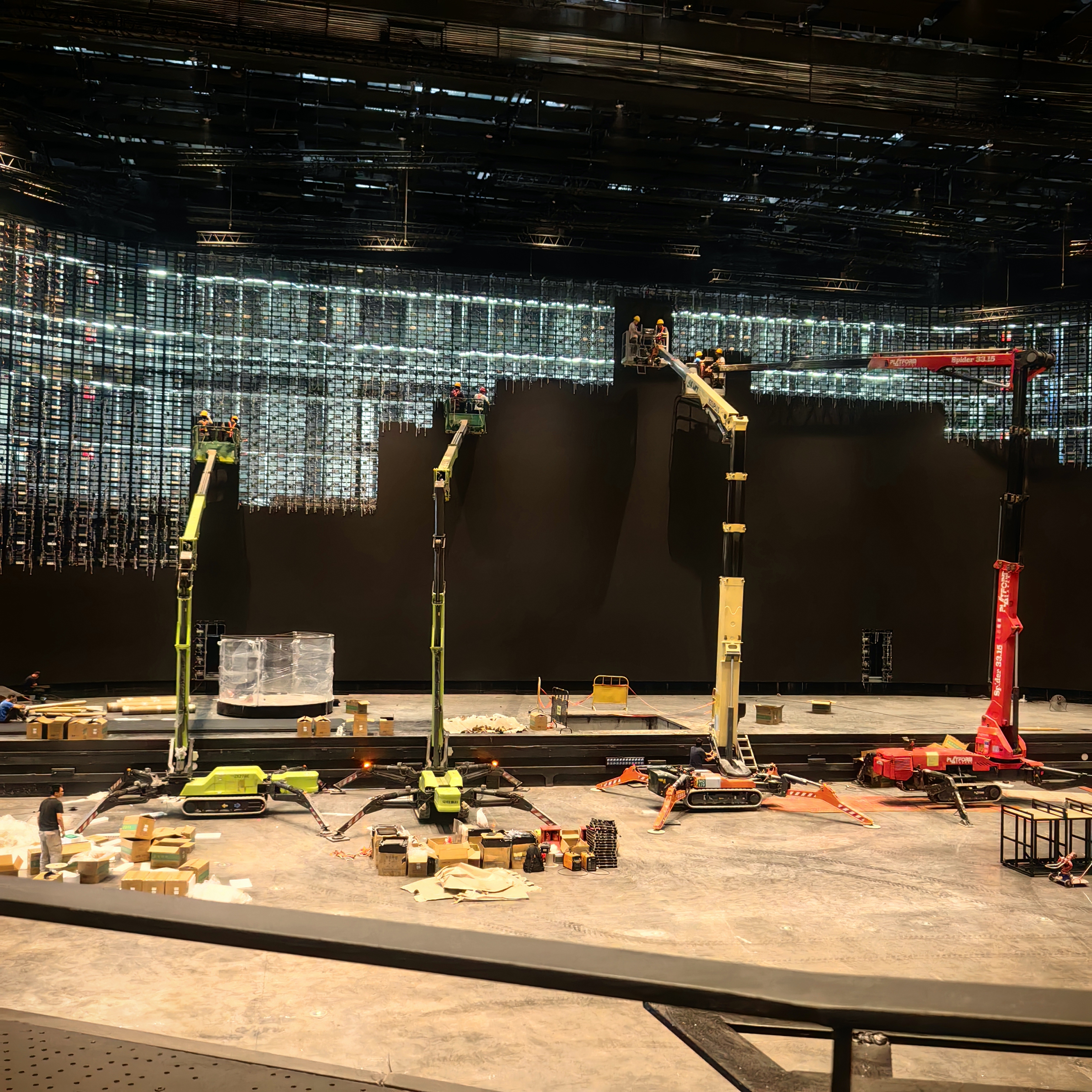
High-level installation work
LED Module Assembly and Rear Connections
The project uses P2.5 LED modules measuring 320 × 160 mm. Based on the nominal pixel pitch, each module is equivalent to 128 × 64 pixels. Multiple modules are assembled into larger display sections according to the stage layout.
Photographs show technicians working behind the screen, routing cables and connecting display components. Reliable power and signal connections, organized wiring, and practical maintenance access are important for a venue-scale installation.
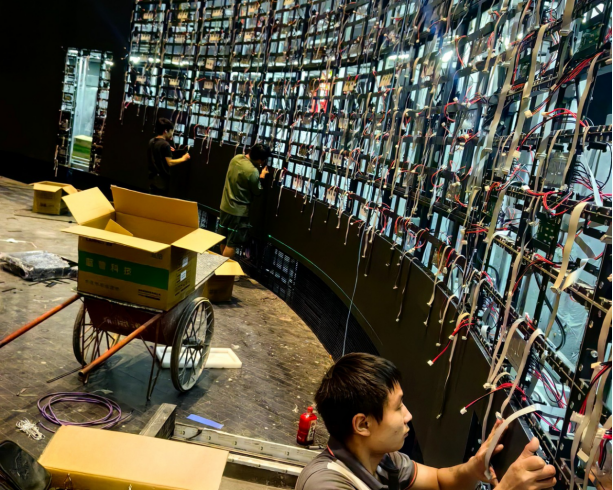
Rear-side wiring and connection work
Back of the assembled display sections
Elevated Installation Across a Large Venue
Several mobile elevating work platforms are visible during assembly. This equipment helps installation crews reach elevated screen sections while coordinating work across the performance area. The photographs illustrate the scale and sequencing involved; they are not a substitute for site-specific safety or rigging documentation.
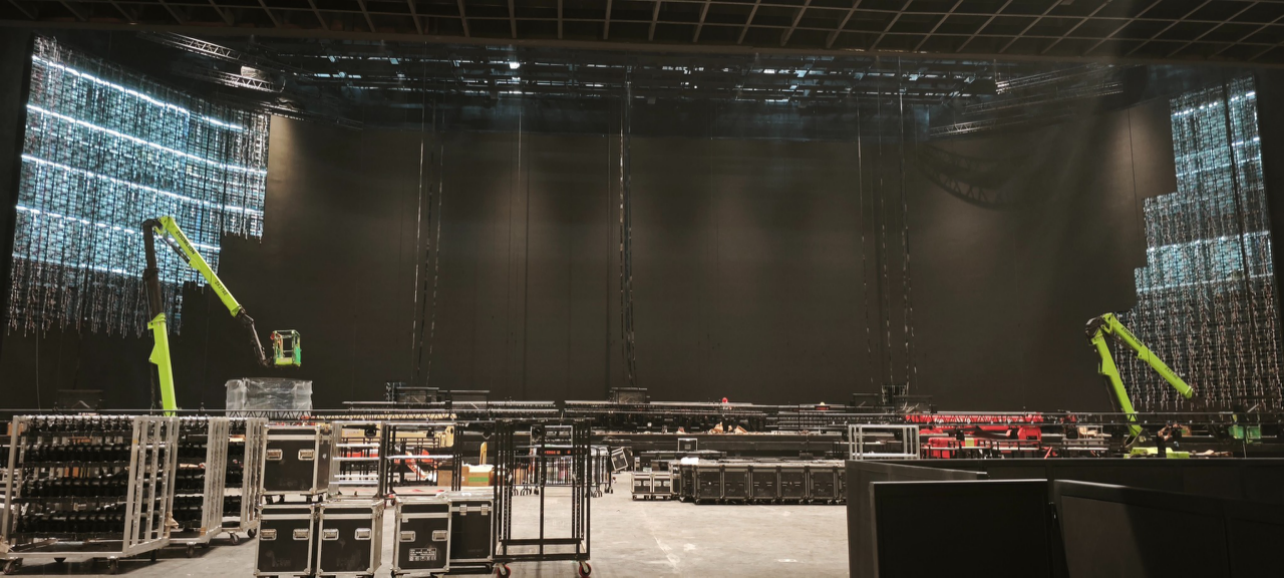
Wide-angle view: elevated installation and preparation across the stage.
Why Use P2.5 LED Displays for Concert Stages?
Detailed Stage Visuals
A 2.5 mm pixel pitch supports detailed imagery for many indoor venues, including performance close-ups, graphic content, and dynamic visual effects. Whether it is the right pitch depends on viewing distances, audience layout, budget, and production requirements.
Flexible Display Configuration
Modular LED construction allows the display sections to be arranged to suit the venue’s geometry and technical plan. The final configuration depends on cabinet design, mechanical interfaces, and the approved installation drawings.
Integration with Live Production
Concert LED screens can display pre-produced media and live video feeds when combined with appropriate processing, playback, and control equipment. Camera-friendliness is influenced by refresh rate, scan mode, processor settings, and calibration; it cannot be established from pixel pitch alone.
The Final Result: A Concert Stage Surrounded by LED Visuals
The performance photograph shows large-scale imagery behind the artist, with LED display content extending across the stage environment. The system provides a visual canvas for close-up footage, atmosphere-building backgrounds, and show-specific graphics.
For entertainment venues, this approach can create a more immersive visual experience than a conventional single-screen stage arrangement, particularly when content and lighting are designed together.
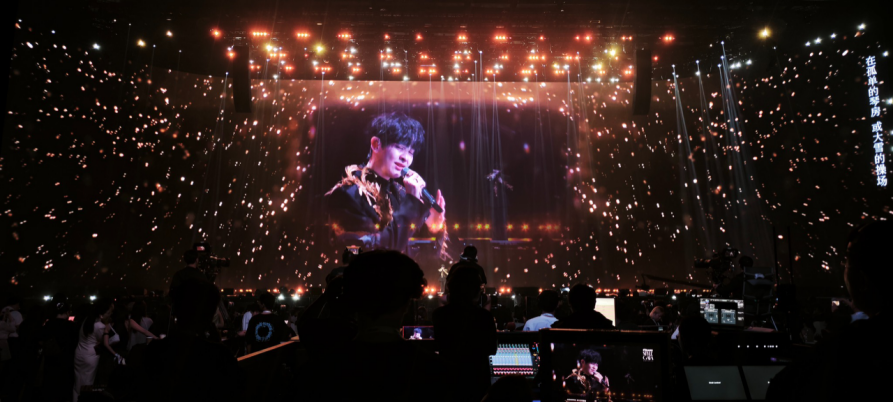
Showtime: concert visuals presented across the large LED display environment.
Planning a Concert LED Screen Project?-Contact us
From theaters and entertainment centers to concert halls and major event stages, LED display planning involves more than choosing a pixel pitch. Screen dimensions, viewing distance, installation structure, video processing, maintenance access, and camera requirements all influence the final solution.
Looking for a stage LED screen or a custom LED video wall for your next project? Contact Colorart LED to discuss venue dimensions, display configuration, and technical requirements.