 EN
EN









P2.5 Church LED Screen Solution in Colombia | ColorartLED
Dual P2.5 Church LED Screen Design Concept For a Colombian Auditorium
Representative Solution Concept:
This is an illustrative church LED display solution for a venue in Colombia. Screen dimensions and technical specifications are recommended estimates for planning purposes rather than verified details of a completed installation.
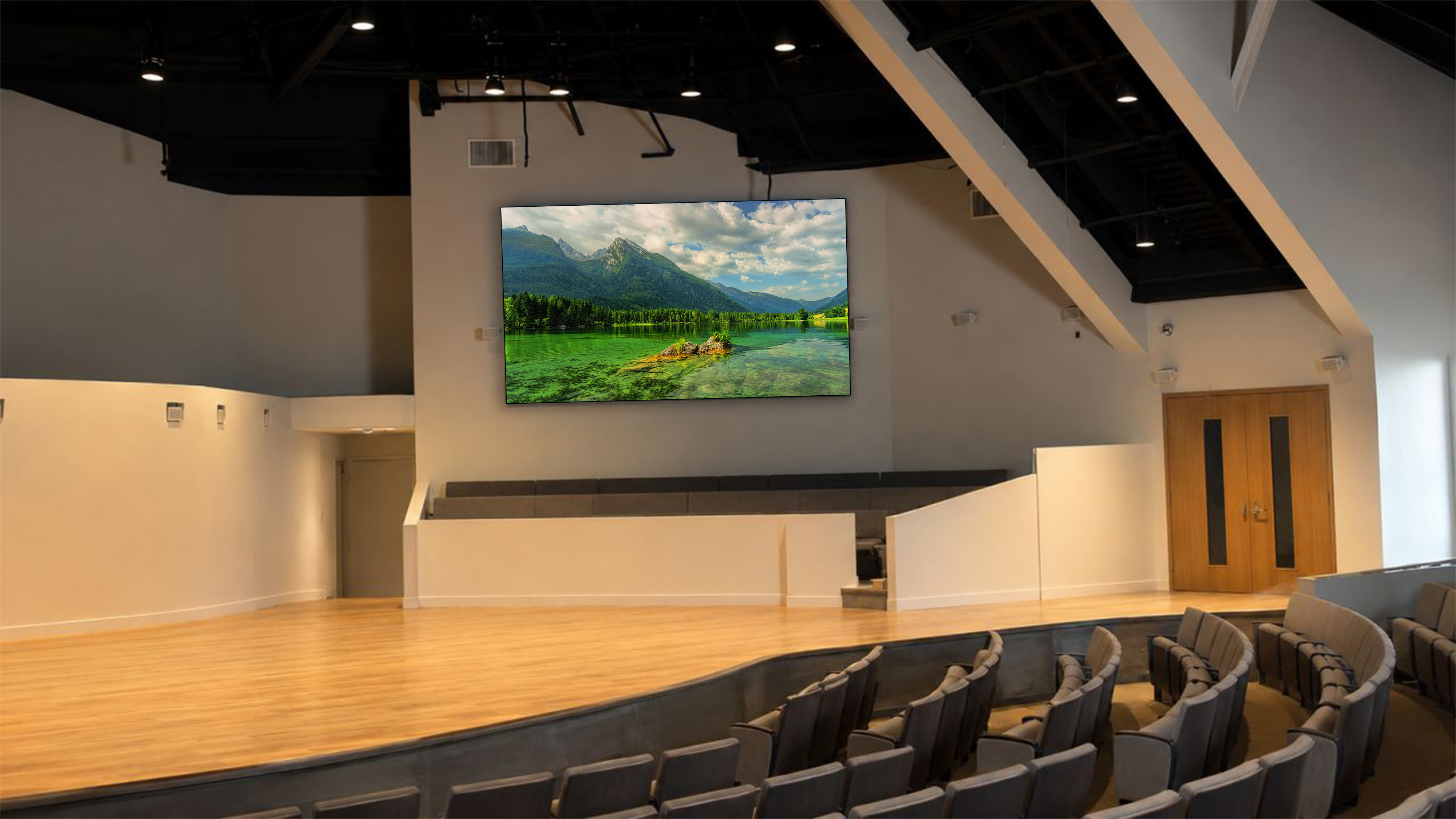
Representative Solution Concept: This project profile demonstrates a recommended indoor LED display configuration for a modern church auditorium in Colombia. The specifications are estimated from the venue layout and are provided for solution-planning purposes.
Modern churches increasingly use LED display technology to present worship lyrics, sermon messages, live camera feeds, videos and community announcements. However, selecting the right screen involves more than choosing a pixel pitch. The auditorium width, seating arrangement, viewing angles, ambient lighting and stage architecture must all be considered.
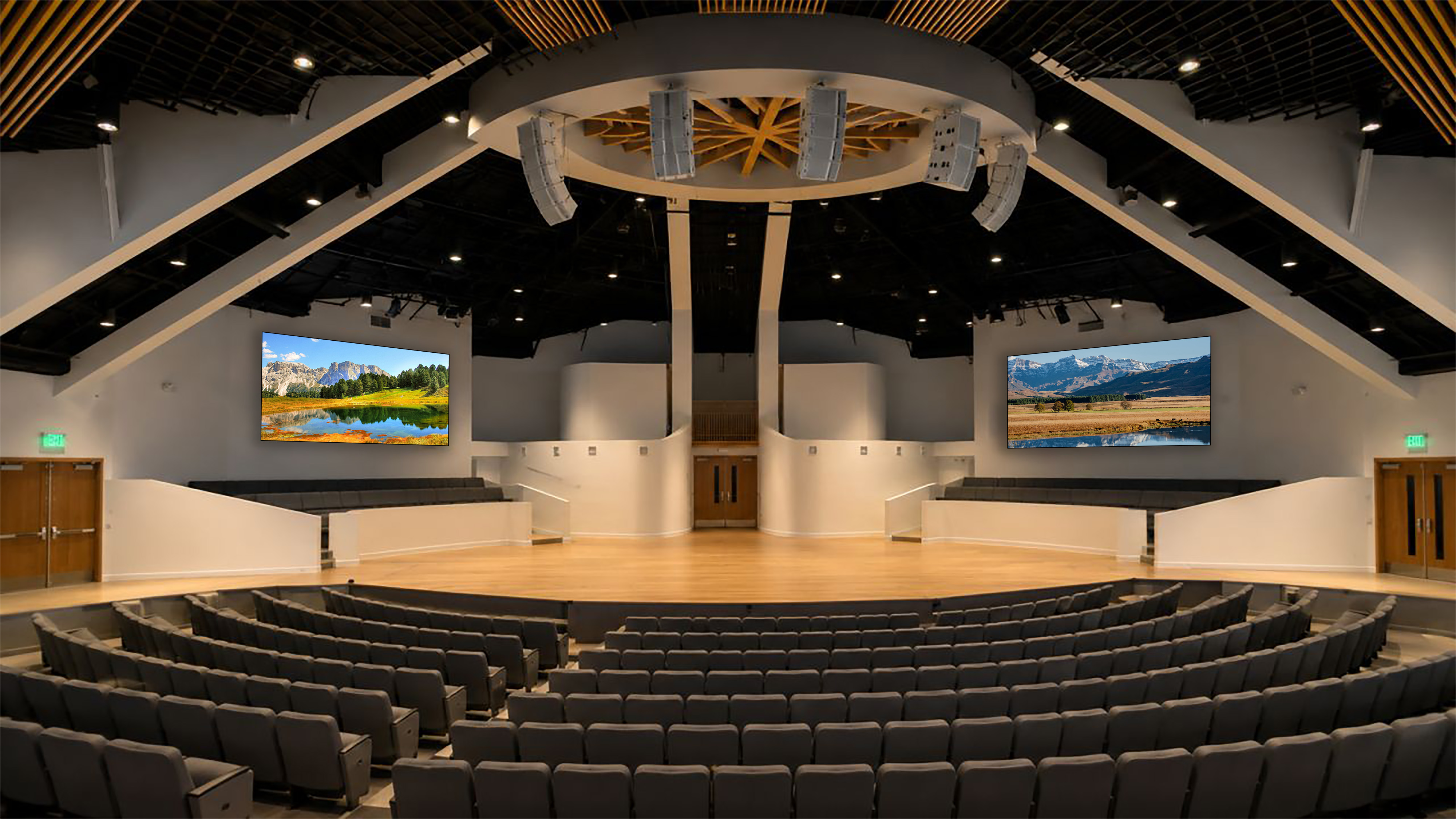
For this representative church auditorium solution in Colombia, a dual-screen layout uses two P2.5 indoor LED displays positioned on opposite sides of the stage. The balanced configuration improves visibility across the auditorium while keeping the central stage open for worship, speaking, music and community events.
Project Overview
|
Project Detail |
Recommended Configuration |
|
Location Scenario |
Colombia |
|
Application |
Indoor church auditorium |
|
Display Layout |
Two wall-mounted LED screens |
|
Pixel Pitch |
P2.5 |
|
Size of Each Screen |
4.0 × 2.25 meters |
|
Area of Each Screen |
9 square meters |
|
Total Display Area |
18 square meters |
|
Resolution of Each Screen |
1600 × 900 pixels |
|
Screen Ratio |
16:9 |
|
Recommended Brightness |
800 nits, adjustable |
|
Refresh Rate |
3840Hz |
|
Maintenance |
Full front access |
|
Installation Type |
Fixed wall-mounted installation |
Designing For A Wide Church Auditorium
A wide or fan-shaped church auditorium can create visibility challenges. Worshippers seated near the side walls may not have a comfortable viewing angle toward a single central display. Architectural beams, audio arrays, stage lighting and other production equipment can also limit the available installation space.
The dual-screen design addresses these challenges by placing one large-format indoor LED screen on each side of the stage.
This layout is designed to:
Improve visibility from central and side seating areas
Keep worship lyrics and sermon text easy to read
Preserve an open central stage
Work with the existing architectural structure
Support synchronized or independent content
Provide camera-friendly performance for livestreaming
Simplify maintenance through front access
Why Two LED Screens Were Recommended
The auditorium has a broad seating area with worshippers viewing the stage from different directions. A single screen could create difficult viewing angles for people seated near one side of the room.
Two symmetrically positioned displays allow congregants to look toward the screen closest to their seats. This reduces extreme viewing angles and distributes visual information more evenly throughout the auditorium.
Both displays can present synchronized content, including:
Song lyrics
Bible verses
Sermon presentations
Live camera feeds
Worship backgrounds
Videos
Event schedules
Community announcements
When required, the control system can also send different content to each screen.
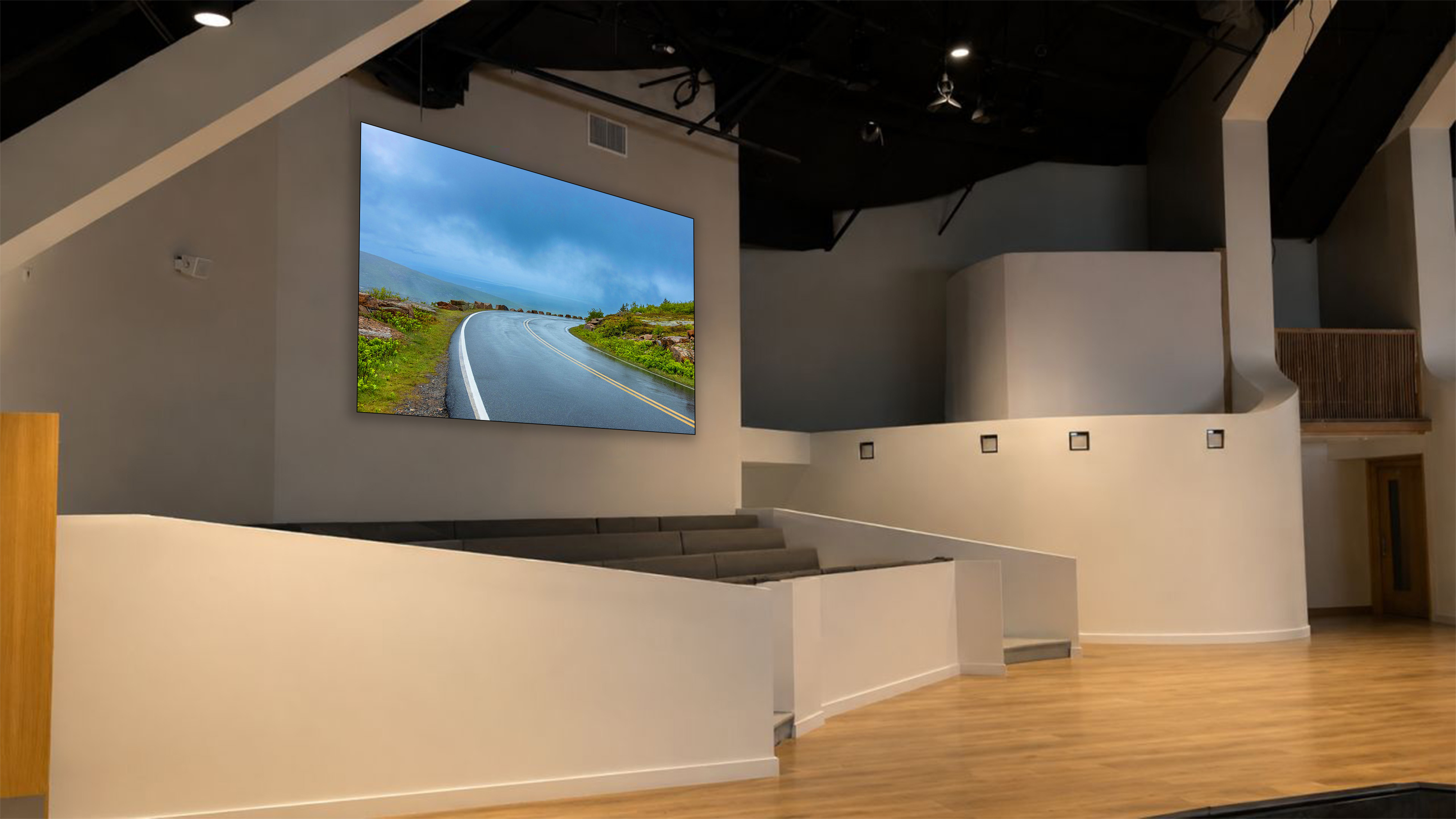
Recommended P2.5 Indoor LED Display Configuration
P2.5 was selected as the recommended pixel pitch for this auditorium concept because it provides a practical balance between image clarity, viewing distance and project budget.
With a 2.5mm pixel pitch, a 4.0 × 2.25-meter screen provides an estimated resolution of 1600 × 900 pixels. The 16:9 aspect ratio is suitable for common video, presentation and livestream content.
P2.5 is frequently considered for medium-sized indoor worship spaces where the audience needs to view:
Presentation text
Worship lyrics
Detailed images
Video content
Live camera feeds
Speaker close-ups
The final pixel pitch should always be confirmed using the actual nearest viewing distance, screen dimensions, camera positions and project budget.
Balanced Indoor Brightness
The recommended brightness for this concept is approximately 800 nits with adjustable brightness control.
An indoor church LED screen does not need the extreme brightness required by an outdoor billboard. Excessive brightness can cause eye discomfort in a dim worship environment and may affect camera exposure during livestreaming.
Adjustable brightness allows the technical team to adapt the screens for:
Daytime services
Evening worship
Stage lighting changes
Video playback
Livestream production
Conferences and community events
The objective is to maintain sufficient contrast and readability without making the displays visually overwhelming.
3840Hz Refresh Rate For Livestreaming
Many modern churches livestream services or record sermons for online audiences. A low-refresh-rate LED display may produce scan lines, flickering or visual interference when filmed by professional cameras.
A recommended refresh rate of 3840Hz helps provide smoother camera performance and more stable reproduction of motion content.
The final system should still be tested with the church’s cameras, shutter settings, video processor and lighting equipment before commissioning.
Full Front Maintenance
Because the displays are mounted directly against the auditorium walls, full front maintenance is recommended.
LED modules, power supplies and receiving cards can be accessed from the front of the screen without requiring a large service corridor behind the display. This helps reduce structural depth and makes future maintenance easier for church staff or local AV technicians.
Before Installation, The Project Team Should Confirm:
Wall load capacity
Mounting frame dimensions
Module access
Power distribution
Signal cable routing
Heat dissipation
Screen alignment
Local electrical and structural requirements
Architectural Integration
The dual-screen design complements the auditorium rather than dominating it. The displays are positioned above the side seating areas, leaving the main stage open and maintaining the symmetry of the room.
Their landscape format works naturally with common worship presentation software and video content. The dark display borders also integrate with the auditorium’s ceiling, lighting and audio equipment.
This approach demonstrates why a successful church LED display project should consider architecture and sightlines before production begins.
Expected Benefits Of The Dual-Screen Solution
When correctly engineered and installed, the proposed system can provide:
Improved Viewing Coverage
Worshippers seated in different areas can view the nearest display without turning toward one central screen at an uncomfortable angle.
Clearer Worship Content
The P2.5 pixel pitch supports detailed text, presentation graphics and video content for typical indoor viewing distances.
Flexible Content Management
The two screens can display synchronized worship content or operate independently for special events.
Camera-Friendly Performance
The recommended 3840Hz refresh rate supports livestreaming and recorded video production.
Easier Maintenance
Front-service access allows key display components to be maintained without dismantling the supporting wall.
Multi-Purpose Use
The system can support worship services, conferences, performances, training sessions and community events.
How To Plan A Church LED Display Project
Every church auditorium has different dimensions and production requirements. Before requesting a quotation, it is helpful to prepare:
Installation country and city
Photos or drawings of the auditorium
Available wall dimensions
Desired number of screens
Nearest and farthest viewing distance
Indoor lighting conditions
Livestream requirements
Target installation date
Preferred budget range
Based on this information, the LED display manufacturer can recommend the appropriate pixel pitch, screen dimensions, resolution, mounting structure and control system.
Frequently Asked Questions
Is P2.5 suitable For An Indoor Church Auditorium?
P2.5 is a practical option for many medium-sized worship spaces. It offers clear text and video performance while maintaining a reasonable project cost. The actual choice should be based on viewing distance and screen size.
Why Use Two Church LED Screens Instead Of One?
Two screens can improve visibility in wide auditoriums and provide better viewing angles for side seating. They can also preserve the central stage for worship and production equipment.
What Is The Estimated Resolution Of Each Screen?
A 4.0 × 2.25-meter P2.5 LED screen provides an estimated physical resolution of 1600 × 900 pixels.
Is 800 Nits Bright Enough For A Church?
Approximately 800 nits is generally suitable for many indoor worship environments. Brightness should be adjustable to match ambient and stage lighting.
Can The Screens Be Used For Livestreaming?
Yes. A 3840Hz refresh rate, suitable control system and correct camera settings can support livestream and recording applications.
How Much Would This Church LED Display System Cost?
The final cost depends on LED components, screen area, control system, mounting structure, spare parts, transportation and installation support. Venue dimensions and viewing distance are required for an accurate quotation.
Request A Customized Church LED Display Proposal
Planning an indoor LED display system for a church or worship auditorium in Colombia or another Latin American country?
Send ColorartLED your venue photos, available wall dimensions, viewing distance and project schedule. Our team can recommend a suitable pixel pitch, screen size, resolution and system configuration based on your project requirements.
Related Church LED Display Projects
Explore more Church LED display projects completed for different auditorium sizes, viewing distances and worship production requirements.
Contact ColorartLED To Request A Customized Church LED Display Proposal