EN
EN

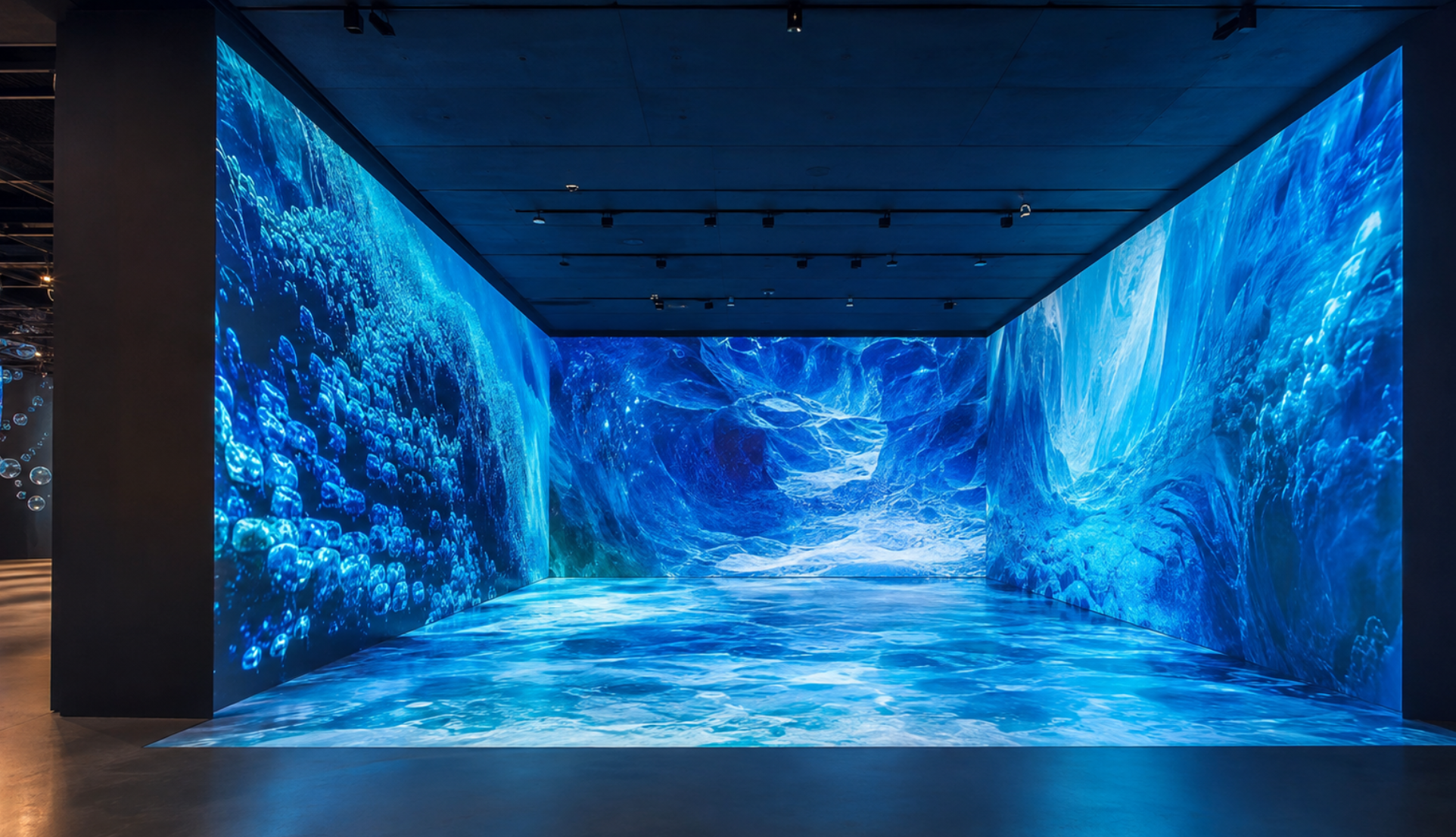
Immersive LED displays are transforming how brands, museums, entertainment venues and corporate spaces communicate with their audiences. Instead of presenting content on a conventional flat screen, an immersive LED display surrounds viewers with seamless, high-resolution visuals, making them feel as though they have stepped directly into the digital content.
From interactive museums and digital art exhibitions to retail showrooms, theme parks and XR studios, immersive LED display solutions are becoming an increasingly important part of modern visual communication. Their modular design, high brightness, flexible configuration and excellent image quality allow them to create engaging environments that traditional LCD screens and projectors often cannot achieve.
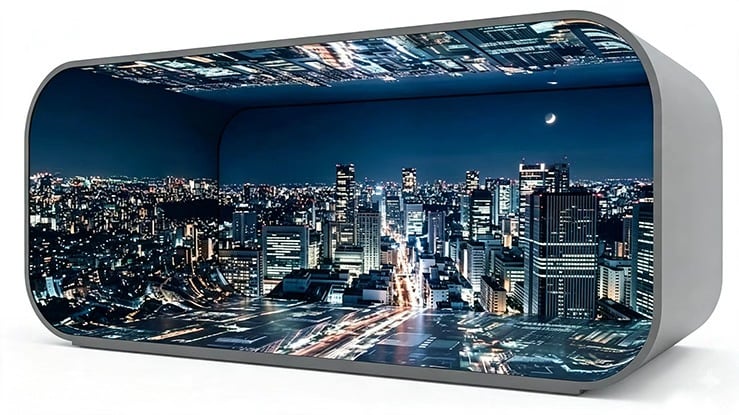
An immersive LED display is a large-format visual system designed to create a highly engaging digital environment. It normally combines multiple LED panels across walls, floors, ceilings or curved structures to produce a continuous visual space.
Unlike a conventional LED video wall that is viewed from one direction, an immersive LED screen can surround the audience from several sides. Synchronized video content, sound systems, motion sensors and interactive technologies can also be integrated to create a complete multisensory experience.
Because LED panels are modular, the size and shape of the display can be customized for different architectural spaces. This makes immersive LED solutions suitable for permanent installations as well as temporary exhibitions and events.
An immersive LED display uses modular LED cabinets or panels that are connected to form a large and nearly seamless digital canvas. A video processor divides the content and sends the correct image signal to each section of the screen.
Fine-pitch LED technology is often used when audiences view the display from a short distance. A smaller pixel pitch provides higher pixel density and helps produce sharper images, detailed graphics and smooth visual transitions.
For curved walls, corners or irregular structures, flexible LED modules or specially designed cabinets can be used. LED floors may also be added to extend the content beneath the audience. When the walls and floor display synchronized content, viewers experience a stronger sense of depth and spatial immersion.
Motion tracking, touch sensors, cameras and interactive software can make the content respond to visitors. For example, images may change when a person walks across an interactive LED floor or moves in front of the screen.
An immersive LED room normally consists of LED walls on three or four sides, sometimes combined with an LED floor or ceiling. This configuration is frequently used in digital exhibitions, simulation centers, museums and experience halls.
Curved LED screens create a wider field of view and reduce the visual interruption caused by sharp corners. They are ideal for panoramic content, corporate showrooms, command centers and branded experience spaces.
An LED tunnel places visual content along the walls and sometimes the ceiling and floor of a passageway. It can guide visitors through a digital story and is suitable for theme parks, exhibitions, museums and tourist attractions.
Interactive LED floors are designed to withstand foot traffic while displaying dynamic content. When combined with motion sensors, they can respond to visitors in real time and create a more engaging experience.
XR studios use high-performance LED walls as digital backgrounds for film, television, advertising and live broadcasting. These systems usually require high refresh rates, accurate colors, low latency and excellent camera compatibility.
Museums and digital art exhibitions use immersive LED displays to present historical stories, artworks and educational content in a more memorable way. Visitors can move through the visual environment instead of simply observing a traditional exhibit.
Retail stores and brand showrooms use immersive LED screens for product launches, digital storytelling and interactive demonstrations. Large, seamless visuals help attract attention and strengthen the customer's connection with the brand.
Corporate experience centers use immersive LED video walls to introduce company history, technology, products and future plans. The content can be updated easily, making the display suitable for customer visits, presentations and internal events.
Immersive LED solutions are also widely used in exhibitions, concerts, theme parks, entertainment venues and XR studios. Because the system can be customized, it can support both creative visual effects and practical presentation requirements.
One of the main advantages of an immersive LED display is its ability to produce large, continuous visuals without the obvious bezels found in LCD video walls. LED technology also delivers strong brightness, vivid colors and excellent contrast, even in environments with ambient light.
Compared with projection systems, LED screens are less affected by surrounding light and do not create shadows when visitors stand in front of the display.
Pixel pitch is one of the most important specifications. The ideal pixel pitch depends on the minimum viewing distance, screen size and required resolution. Projects with close viewing distances normally require a finer pixel pitch.
Brightness should match the installation environment. An indoor museum generally needs lower brightness than a shopping mall, stage or outdoor attraction. Excessive brightness in a dark room can cause viewer discomfort, so brightness adjustment is essential.
Refresh rate is particularly important for XR studios, live broadcasting and locations where visitors frequently record videos. A high-refresh-rate LED display can reduce visible scan lines and flickering on camera.
Buyers should also evaluate color accuracy, contrast, cabinet flatness, corner transitions, heat output, operating noise and maintenance access. In enclosed immersive spaces, efficient heat dissipation and quiet operation can significantly improve the visitor experience.
Before production begins, the LED display manufacturer should understand the dimensions, viewing distance, architectural structure, content format and installation conditions of the project.
The cost of an immersive LED display depends on the total screen area, pixel pitch, LED packaging technology, cabinet design, control system and structural requirements.
A customized curved screen or LED cave may require additional engineering compared with a standard flat video wall. Installation, transportation, content production, sensors and audio systems can also affect the total project budget.
For this reason, buyers should provide detailed drawings, dimensions and application requirements when requesting a quotation. A professional supplier can then recommend a solution that balances image quality, reliability and budget.
A reliable manufacturer should provide more than LED panels. Look for a supplier with experience in customized structures, system design, color calibration, aging tests, installation guidance and after-sales support.
It is also important to confirm the availability of spare parts, technical documentation and remote support. For complex immersive projects, good communication between the manufacturer, system integrator, content team and installation contractor is essential.
The best pixel pitch depends on the viewing distance and required resolution. Fine-pitch options are generally recommended when viewers will stand close to the screen.
Yes. Specially designed floor LED panels can withstand foot traffic, while lightweight LED cabinets can be used for ceiling installations after structural and safety evaluation.
LED displays usually provide higher brightness, stronger contrast and better performance in ambient light. Projectors may be suitable for some low-light environments, but they can create shadows and require more control over surrounding light.
Yes. The display can be customized according to the room dimensions, viewing distance, architectural design and application requirements.
An immersive LED display can transform an ordinary space into an engaging digital environment. Whether the project is designed for a museum, retail store, exhibition, corporate showroom, entertainment venue or XR studio, the right LED solution can deliver seamless visuals and memorable audience experiences.
Planning an immersive LED project? Contact our team with your screen dimensions, viewing distance and application requirements. We will help you select the appropriate pixel pitch, display configuration and control solution for your project.
 Hot News
2026-10-07
2026-08-07
2026-06-29
2026-06-10
2026-05-11
2026-05-06
Caiyi LED Display Technology is a leading enterprise specializing in LED screens,driving Industry innovation with our patent mechanical led screen







305, Building 18, Advanced Energy Storage and Energy Saving Creative Demonstration Industrial Park, No. 169, Section 2, East Renmin Road, Changsha Economic and Technological Development Zone
Copyright © Caiyi Led Display Technology Co., Ltd. All Rights Reserved Privacy Policy Blog